AI tools can create product images in seconds. But turning them into visuals that actually sell is a different challenge entirely.
AI product photography has quickly become one of the most searched topics in e-commerce. From startups to established brands, businesses are looking for ways to create product images faster, reduce production costs, and scale content without traditional photoshoots. But despite this progress, many brands are still facing the same issue: their product images look good, but they don't convert.
The Rise of AI Product Photography Tools
AI tools have made visual creation more accessible than ever. With the right prompt, brands can generate:
- AI-generated product images for e-commerce listings
- Lifestyle visuals for marketing campaigns
- Ad creatives for social media
- Product-focused content for websites
For growing e-commerce brands, this offers clear advantages: faster content production, reduced dependency on photoshoots, lower costs, easy experimentation with styles, and scalable visual output. On the surface, AI product photography tools feel like the perfect solution. But as brands begin using these visuals in real campaigns, a gap starts to appear.
The Problem Most Brands Don't Expect
AI tools are built to generate images. But e-commerce brands don't just need images — they need high-converting product visuals. This is where most brands struggle.
Many AI-generated product images look visually appealing and follow modern design trends. But they often fail to:
- Clearly highlight product benefits in a scannable way
- Guide customer attention toward the key value proposition
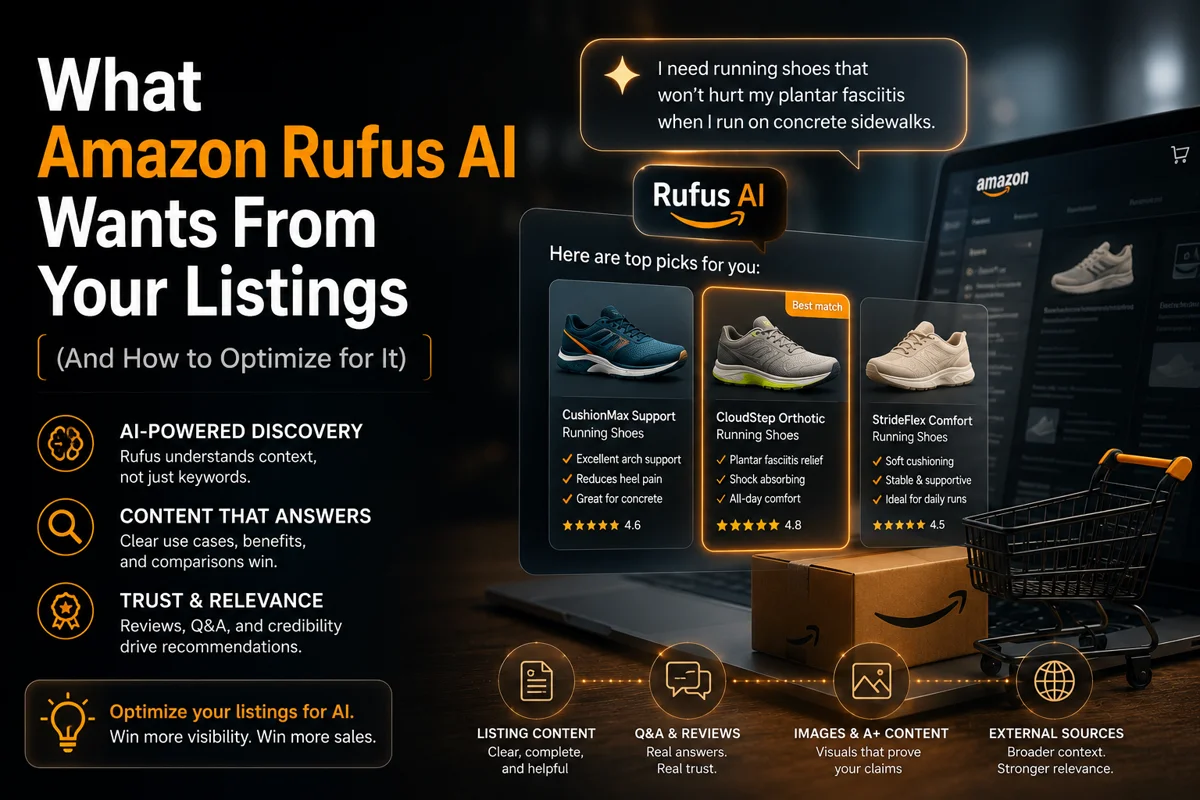
- Align with e-commerce platform requirements (especially Amazon)
- Maintain visual consistency across an entire listing or campaign
As a result, brands end up with visuals that look impressive but do not improve performance.
Popular AI Tools for Product Photography
Several AI tools are commonly used by brands today:
ChatGPT Image Generation
Used for creating product concepts, lifestyle visuals, and quick variations. Strong for ideation and rapid iteration across different visual styles.
Midjourney
Known for high-quality, stylized product imagery and creative scenes. Produces aesthetically polished outputs that work well for lifestyle contexts.
Runway
Used for video-based content and dynamic visual generation. Increasingly used for short product clips and ad creative.
These tools are powerful for ideation, concept testing, and visual experimentation. However, they are not designed to manage brand systems or optimize visuals for e-commerce performance.
Why Most Brands Still Struggle
Even with access to advanced AI tools, brands continue to face the same core challenges:
- Lack of creative direction. AI generates what you ask for. It does not define what your brand should look like or what a conversion-focused image needs to communicate.
- No focus on conversion. Most AI-generated visuals prioritize aesthetics, not performance. Looking premium and performing on Amazon are two different goals.
- Inconsistent branding. Different prompts create different styles, leading to a lack of visual identity across a listing or campaign.
- Platform-specific requirements. Amazon, Shopify, and ad platforms each require different creative approaches, which AI tools do not automatically optimize for.
Tools vs. Systems
AI tools are powerful. But tools generate outputs. Systems create results. Brands relying only on AI tools often produce large volumes of visuals without improving performance. Brands that combine AI with structured creative systems can scale content efficiently, maintain brand consistency, and improve conversion rates.
This is the difference between creating images and building a visual system that actually delivers results. At Dobby Ads, we combine AI-generated product visuals with structured creative direction, e-commerce-focused design principles, and scalable workflows — so the result isn't just better-looking images, but product visuals that are consistent, conversion-focused, and built for real performance.
Final Thoughts
AI product photography tools have transformed how brands create visuals. They offer speed, flexibility, and accessibility that traditional production cannot match. But the real challenge is not creating images. The challenge is creating images that work.
As e-commerce becomes more competitive, brands need visuals that communicate clearly, build trust, and drive conversions. AI can support that process. But it cannot replace a creative strategy.
Frequently Asked Questions
What are the best AI tools for product photography?
Popular tools include ChatGPT image generation, Midjourney, and Runway. These are widely used for creating product visuals, lifestyle images, and marketing creatives. Each serves a different purpose — ideation, stylized imagery, and video content respectively.
Can AI replace traditional product photography?
AI can reduce dependency on traditional photoshoots, but brands still need creative direction and strategy to achieve consistent and high-performing visuals. The best results come from combining both approaches.
Why do AI-generated product images not always convert?
Because many focus on aesthetics instead of product communication, brand consistency, and conversion-focused design. A visually impressive image that doesn't clearly answer buyer questions won't perform, regardless of how polished it looks.
Are AI product images good for e-commerce?
Yes, when used correctly. They are most effective when combined with structured creative systems and platform-specific optimization — not used as a standalone output generator.
Does Dobby Ads create AI product images?
Yes. Dobby Ads helps e-commerce brands create AI-powered product visuals that are consistent, scalable, and designed for performance across Amazon, Shopify, and DTC channels.